
EN

Origins of Okinogu
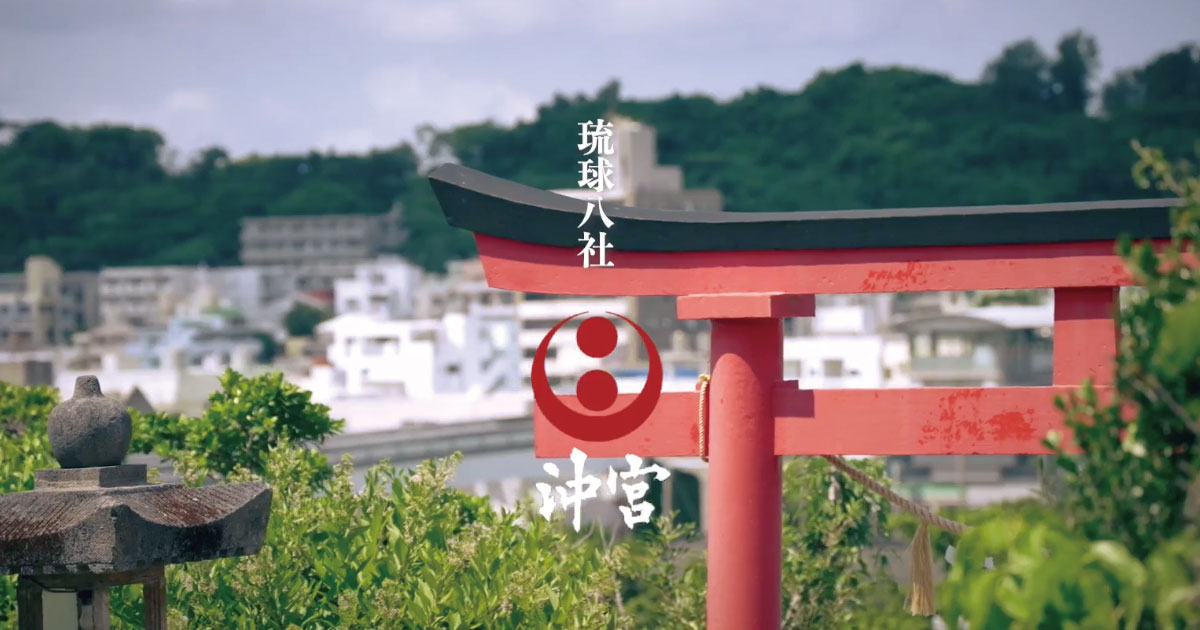
Origins
Okinogu is one of the Ryukyu Seven Shrines and Eight Shrines, and while its exact founding date is unknown, its origin is recorded in the historical collection Ryukyu Shiryo Sosho.
In ancient times, a mysterious radiance appeared in Naha Port. The Ryukyu king obtained the source of that brilliant light and revered it as a sacred tree, a trace of Kumano Gongen, and a shrine was established on this site.
From the following night onward, the shining light was no longer seen upon the water. This deepened devotion to the shrine among the king and the people, and Okinogu came to be revered by official ships to China, tribute ships traveling to and from Satsuma, and travelers and sailors of every class who prayed for safe voyages.
In 1935, the shrine was designated a National Treasure upon the recommendation of Dr. Chuta Ito, but it was tragically reduced to ashes during the war.
In the Ryukyuan old song Nobori Kuduchi, the line
"Up to the side of Oki, parents, children, and siblings together"
is said to refer precisely to this shrine and nearby Okiyama Rinkaiji Temple.
History of Okinogu
Okinogu overlooks Manko in Onoyama, one of the scenic Eight Views of Okinawa, with the colors of the southern sea and the beautiful shoreline of the inlet behind it. It is a sacred hill that has long preserved both venerable faith and a deep history.
From the harbor to relocation
Enshrinement by the sea
Okinogu was originally enshrined at the First Pier of Naha Port. In 1908, because of harbor construction, it was relocated to adjacent land near Asato Hachiman.
War and restoration
Divine guidance to Tentozan
After the shrine was destroyed during the war, Makoto Higa received a divine message: "Restore Okinogu." Through the teaching of jichimakuto and the path of lived truth, he was led to understand that all growth begins from the root. That awakening became the starting point of Okinogu's restoration.
Three sacred hills
Tentozan, Higomori, and Ginmori
Tentozan is also called Tentozan or Amachihou. Onoyama is described as having three hills: the eastern hill, Tentozan, known as Kuganimui; the central hill, Higomori; and the western hill, Ginmori.
Shingon transmission
Raiju Hoin and Nichishu Shonin
In 1368, Raiju Hoin came from Ichijo-in in Bonotsu, Satsuma, and in 1522, Nichishu Shonin and Shinkai traveled to Okinawa and spread Shingon Buddhism. They are remembered for reviving the Ryukyuan shrine tradition, founding Ryudoji in Onoyama Park, and opening the sacred Utaki there.
At the Utaki, a black stone carved with Sanskrit letters still preserves the memory of former ages.
It is revered as a miraculous sacred ground and one of Okinawa's foremost spiritual peaks.
After the war, daily pilgrimage to Tentozan guided the path toward restoring Okinogu,
and that journey shaped the shrine's present place of prayer.


